Showing posts with label Blackfoot. Show all posts

Wednesday, September 12, 2018

“Partners” rhyme – an overview


Barkerville about 1865

Here is a rhyme covering some of the story that appears in the novel “Partners”. No, it is not about the current trend to marry members of the same gender.
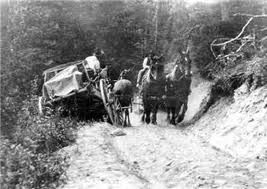
Wagon and three up on Cariboo Road

I suppose it could be likened to some of the couples one sees, of all genders, who, at first glance one might suspect have no business uniting. Some do make a viable couple and some do not.
This is a rhyme of six stanzas and therefore cannot cover all that is presented in a story of 246 pages which includes references to the wide Canadian Prairies, murder, genocide, renegades/outlaws, “manifest destiny”, Cree and Blackfoot, the early assassination of a policeman (murder again), vigilantes, gold mining, and self defense. It does give a fair idea of how I started the story; the unlikely joining of young and old, tenderfoot and “cheekako”, diplomat and attacker.
Calvenos Claim on Lowhee Creek

The video (not the best of those available but not the worst) trailer is at http://www.youtube.com/watch?v=S6LEqjRHCDQ 
And the novel itself can be found by clicking on the “Partners” cover off to the right.
Or at amazon.com/author/dmmcgowan at Barnes & Nobel, Indigo and Cole’s
It, as with my other novels is also available in a variety of digital formats.
The reason for the Barkerville pictures is that is where the story ends … and the one I’m working on with the same characters and some new troubles, begins.
            As always, leave a comment. Even if you don’t like what you read I’d like to know about it and why.

“Partners” overview
By D.M. McGowan

He was an educated man, Thomas Brash by name
Raised for the British Army to follow his father’s fame
Born in Upper Canada, the eastern Loyalist land
Then sent across the sea, military school, England

He had served in several stations, Europe, Africa and such
But found the land of Hind demanded just too much.
He left the British Army returned to his Kingston home
Taught school, married and farmed and vowed no more to roam

But fate stepped in to change the future he had planned,
Cholera took the family, he burned the house, left the land.
He wandered to the west perhaps thinking life was done
More than thirty years of effort and everything was gone.

But out there on the plains he found someone he could help
Perhaps some master plan? He’d play the cards he was dealt.
Two wandering strangers as different as they could be
Can each survive the other’s thoughts and company?

Renegades, Blackfoot and psychopaths they face
The elements alone are hard on the human race
Indian wars and killers, all the across the west
Such is their future where simple living is a test.

From different places and different teachings
Perhaps these two are over reaching
But it takes bold people to build a land
And different ideas build one that stands
Mucho Oro Claim
Pulling over for traffic on the Cariboo Road ...
Which usually necessitated a visit 


Sunday, August 3, 2014

North West Mounted Police livestock Part 2


Is it not about time I finish this story?

            Yes, the Mounted Police had left Dufferin on July 8 but on the afternoon of July 24th they had only made it to La Roche Percée less than a third of the distance the Commissioner expected to travel that summer. The trail behind them was already littered with broken wagons and carts and the many oxen and horses that had succumbed to hunger and fatigue.

            It must be acknowledged that they really only knew the distance they had travelled and not how much more trail lay in front of them. Due to the excellence of the maps French had and his inability to listen to anyone, they didn’t really know how far they where going. Nor could they guess about the weather they would experience, the land and vegetation or shortage of water.

            The “westernized” horses and mustangs were faring marginally better than the “proper” horseflesh that had been purchased and imported from Ontario and the Eastern US. Unlike the “high-bred” animals the mustangs could almost manage on a diet of prairie grass and some oats but they too where being over-worked and needed rest. Seeing the state of the animals Colonel French sent Colonel MacLeod for more oats which helped but what the expedition really needed was to move slower, haul less freight or have more animals that could be traded out to off-duty status every few days.

            During their sixteen days of travel they also discovered that their “walking larder” was, instead of the benefit envisioned by French, a millstone slowing their progress. In all that time two beef had been butchered and the result was that every man suffered from Diarrhea sever enough that it could have caused a death. Those who had travelled in the west, including the Métis who accompanied them and the Doctors both with the troupe and in Dufferin predicted the result of eating beef from animals that where being worked but French didn’t listen. 

            It was while they rested at Roche Percée that Colonel French made decisions that would greatly affect the type of livestock found in Western Canada in the years to come. First he sent his “walking larder”, the now 52 cows and 11 bulls along with more than a dozen calves that had been born on the trail east and north to Fort Ellis. Lead by Inspector Jarvis they were to eventually turn west and make for Fort Edmonton.

            Having made that decision he then turned to the horses and their sorry state. He separated the better mounts – which, surprise, surprise, proved primarily to be the western animals and “ratty little mustangs” – and kept those for the troupe continuing west. Since French expected Jarvis’ troupe would have no trouble making Fort Ellis before winter and could move at any pace they chose much of the heavy equipment such as hay mowers and heavy forges would go with them.

            Some of this equipment had to be retrieved the following year.

             There where immediate advantages for both the men and their commander in these decisions. The primary and most welcome change for the men was that they were now, after yet another trip by Colonel MacLeod, eating pemmican. Had they started out on such supplies they may have been in much better health on July 24th and at the end of their trip that autumn.

            French also sent most of the Métis back with the Jarvis troupe. He had found them to be far too independent, ignoring his orders in some cases but now and then acting counter to his orders. He did however keep a few of the guides which may not have been wise.

            In a general sense Inspector Jarvis and his men managed to complete their mission. Upon arrival in Fort Ellis some chickens, a few beef and oxen found a home. A half dozen men with a variety of maladies including cholera complicated by a lack of nutrition where sent south to Dufferin where two of them died. Another dozen in slightly better health but badly weakened by their ordeal remained in the Fort Ellis post and cared for the animals but suffered a terrible winter. The remainder eventually made it to Fort Edmonton.

            Upon arrival in Edmonton the welcome for the Mounted Police was not what they expected. True the Hudson’s Bay Company factor and his staff fed and helped to treat the troopers for their ailments. The presence of those troopers helped to curtail and would eventually eliminate the problem of liquor trade which was interfering with “The Bay”, or “The Company’s” business. However the proximity of all those uniformed police also tended to interfere with the Company’s regular business and turn the trappers toward free traders. The following year, down river (the North Saskatchewan) from Fort Edmonton about 18 miles the North West Mounted Police established Fort Saskatchewan.

            In the meantime the main body of Mounties far to the south did make it to what is now Southern Alberta. They confronted a few well built and some ram-shackle whiskey forts, closed them down and destroyed them. They established Fort MacLeod, Fort Calgary and Fort Walsh and several outposts. They passed laws banning whiskey from the North West Territories, caught whiskey traders defying those laws, confiscated their equipment, destroyed the whiskey and locked men up in the various posts or sent them east to Stone Mountain Penitentiary.

            The trek west wasn’t truly over when Commissioner French resigned. He and the new commissioner, Colonel MacLeod and a few troopers rode south to Billings Montana where they were wined and dined by some of the very people who had been behind the whiskey trade but now became suppliers of goods for the North West Mounted Police. During this first trip to Billings they bought horses to replace the many that had died along the trail and a few cattle.

            One of those who supplied horses was Jerry Potts, known by his mother’s people (the Kainai of the Blackfoot Confederacy) as Bear Child. He became THE guide for the Mounted Police and, eventually, an Auxiliary Constable. In this writer’s opinion Jerry Potts and Colonel James MacLeod are the two men primarily responsible for the initial survival of what was to become the Royal Canadian Mounted Police.

            In the beginning the N.W. Mounted Police livestock and thus the horses and cattle brought into the Territories were a mixed lot. The cows and bulls that started with the trek and mostly wound up in Fort Saskatchewan were Shorthorn and Hereford. Those cattle brought up from Billings were Shorthorn or Shorthorn-Longhorn cross but most of these steers and only a few cows. A few of the Thoroughbred horses survived to add their genes to the mix as did a few Belgian and Percheron draft animals. The mustang, Morgan (those that had been “westernized” by the US Army), and some Nez Percé animals (today’s Appaloosa) also added to the mix.

            These where the types of livestock to be found in Canada’s North West Territories when cattle and horse began coming in from Oregon, British Columbia and Montana as outlined in earlier posts.

            Cattle came to British Columbia because of gold discovered in 1859. Cattle came to the east side of the mountains in 1875 (a few in ’74) because of the arrival of 270 policemen but the police came because of the whiskey.

            Colonel MacLeod resigned as Commissioner after 3 years of service but remained a Crown Magistrate.

            Jerry Potts remained with the Mounted Police and received full recognition and honours from the Force upon his death and received similar recognition from his mother’s people.

            Many of the policemen remained in the west when they left the Force and became the cattlemen and horsemen of the Prairies. During the North West Rebellion or Métis Rebellion of 1885 the “Rocky Mountain Rangers” was formed to protect civilians in Southern Alberta. About a third of the Rangers, perhaps more were former Mounted Policemen.

            The influences of California, Texas, Europe and Britain can be seen in the methods, tack and livestock breeds in the Canadian West of today. Over the years however there are things that are distinct and unique to Canada and differences between those East of the Rockies and those to the West.


Sunday, April 20, 2014

Cattle Drives in Western Canada, Part 2


Almost anyone will agree that Southern Alberta is the centre of the Canadian Cattle Industry. There is an argument that a couple of ranches west of the mountains are larger than any on the east slope. Those on that east slope can argue that Southern Alberta produces more cattle both for feeding and for market. One argument that can not be denied is that Western Canada’s cattle business did not start off in the Southern Alberta area but in Southern BC.

            In 1869 British Columbia had already spent ten years establishing herds of cattle and horses and farms producing pork, dairy products, oats, barley, wheat and many other items. The land east of the Rocky Mountains had little more than a few garden plots as far east as the Assiniboine and Red Rivers or Fort Gary. (You may know it now as Winnipeg.) The two year old country of Canada had just taken over that vast stretch of land which included the area the former manager (Hudson’s Bay Co.) called Rupert’s Land. It was still the home of all the Hudson’s Bay trading posts that had been there before but the factors of those posts no longer managed or supplied security for anything more than the actual storage and trading areas.

            It is true that being responsible for several hundred thousands of square miles of land is a serious responsibility for a two year old government but that was a small fraction of their worry. They also had several thousand Métis residents who had been the work force that kept the Hudson’s Bay Company operational for several generations but where now French speaking Catholics in a world controlled by English speaking Protestants. They also had a neighbour to the south who was ten times larger by population, even after a devastating Civil War, many of whom believed it was their Manifest Destiny to govern all of North America. Whiskey traders were also bringing in alcohol, much of it lethal and selling it to the natives who, if they didn’t die from the so called “whiskey” itself wound up killing each other in alcohol induced fights or freezing in the snow. Then, the last straw was a drunken battle in the Cypress Hills between a group of wolfers and about three hundred Nakota where 23 of the Indians where killed.

            (This is the battle at the end of the award winning novel “The Englishman’s Boy” by Guy Vanderhaeghe which became the award winning TV mini series with Michael Eisner in the lead role.)

            The Prime Minister, John A. McDonald with a great deal of help from advisers, decided Canada’s North West Territories needed a police force the size of a small army. Eventually this force was formed – after the usual time and money wasting as is associated with any bureaucratic body – and called the North West Mounted Police.

            Despite his demands what John A actually got was a force the size of a small battalion.

            What does this have to do with cattle drives? It meant the immigration of a small body of consumers of beef and relative safety for settlers or more consumers.

In the late summer of 1874 two hundred and seventy former farmers and military men where living and working on the Canadian prairies and they needed to be fed. This doesn’t require a large herd every year but it does require some cattle and if possible a few pigs and chickens.

Those first cattle came from Montana to places like Fort MacLeod, Fort Walsh and Fort Saskatchewan. Most of these were the wild, long horn animals that had been trailed up from Texas during the nine years since the end of the Civil War.

Later it became apparent to commanding officers – Walsh, MacLeod, and many of those under them – that the Blackfoot where not going to receive the meat they had been promised. Though they didn’t have clearance or the money a few extra cattle where added to the herds from the south and, along with some trapping and hunting the Blackfoot people managed to survive.

When in 1876 Sitting Bull’s people came north of the 49th parallel after the Battle of Little Big Horn, money was found for a few more cattle.  Not enough to feed both the Lakota and the Blackfoot but, with a little special management, enough to avoid embarrassment for government people and enough to avoid an Indian war.

Feeding the various native tribes was a problem that continued for most of those last years of the nineteenth century. As a small example, George and Edward Maunsell had 103 head of cattle delivered to Southern Alberta in June, 1879 to start a ranch. In the fall of that year when the local ranchers completed their roundup the Maunsells (who had participated in the roundup) found they had 54 head. The Blackfoot, Cree, Assiniboine and Lakota managed to survive but relations between these people, the ranchers and the Mounties took a very long time to recover even though it was the “toffs” in Ottawa that created the antagonism.

Having heard of the arrival of the Mounted Police on the plains a man named John Shaw, along with Frank O’Keefe and Charles Ashton took two hundred cows and a hundred eighty seven steers through the North Kootney Pass. They arrived in Morley, North West Territories in August 1875 but there was little sale for their cattle since supply had already been received from Montana. Shaw rode north to see if there was sale for his beef at Fort Edmonton (Hudson’s Bay) or Fort Saskatchewan (NWM Police) but those sites had also been supplied by animals from the south.

There were several bringing cattle up from Montana in those early years most notably George Emerson and Tom Lynch. The foundation for these animals was the Texas longhorn but in the 1870s they where beginning to be bread with heavier animals from Oregon.

During the fall and winter a great deal of building took place a short distance from Morley where John Shaw had returned after his unsuccessful trip north. The Mounted Police built a new post, the Hudson’s Bay Company expanded their post and I.G Baker of Fort Benton built a post. Next to the Police post was the T.C Power & Brother store, Harry Taylor’s billiard hall and some Métis cabins.

This new NWMP post which had been named Fort Brisebois after the Officer Commanding the detachment was renamed by Assistant Commissioner Irvine at the suggestion of Colonel Macleod.  Thus in the spring of 1876 John Shaw, having completed a sale to the NWMP through an agent finally began delivering his BC cattle, the first herd to be sold in Calgary. The name of the post came from Calgary House on the Isle of Mull in Scotland. The first cattle in Canada’s premier “cow-town” came from the Chilcotin and Okanogan countries in B.C.

What really increased the cattle business was the railroad reaching into the plains. In 1881 the Canadian government opened large areas for ranching leases. These ranches, usually were of several thousand acres and supplied with financing from Eastern Canada, the US or England. A few years later the Homestead Act was instituted and the large ranches gained neighbours of 160 to 640 acres.

Going back a couple of years and a couple of paragraphs, many of the cattle that came in to stock these new ranches where driven by George Emerson and Tom Lynch. In both 1779 and 1880 they brought 1000 head in from Montana, selling many of them to the growing number of settlers around the Fort Macleod area but also building up herds for themselves.  In 1883 a herd of 3000 head for the newly formed North West Cattle Company and in ’84 another 2000 head.

It will be evident that the few men mentioned are not the only ones who brought cattle into the North West Territories during these years. By 1884 when the Transcontinental Railway was working its way up the foothills and into the mountains the range was already overstocked and full of many thousands of cattle.

In 1885 the Mounties went east to join the Canadian Militia in putting down the Riel Rebellion.

The three member nations of the Blackfoot Confederacy hunkered down on their reserves to ensure the white men didn’t think they where involved with the Métis and Cree fighting that war. While attempting to stay out of sight they began entertaining the idea of raising cattle along with the horses. They still had a few of each despite their living conditions and within a few years managed to acquire the government loan of bulls to build those herds.

During the years from the US Civil War (1865) until 1886 millions of cattle had been moved around on the surface of North America. Several of those millions had wound up in the slaughterhouses of Chicago. Several hundred thousand had become the foundation of herds in those areas that are now the states of Montana (1889), Wyoming (1890), and the Dakotas (1889) and through the usual forces of nature became millions.

The same forces where pressuring the Canadian cattle industry. Every year the price for beef would fall a little in the east and every year a little more money was demanded of those raising cattle. In the case of the large “combines” with several thousand cattle the demand was from the ranch owners in offices on Wall Street, Young Street or Fleet Street. In the case of the small operators the cash demands where from bankers and suppliers. Consequently on ranches from Fort Edmonton to El Paso the land was overgrazed.

During the winter of 1886 – ’87 nature solved the overgrazing problem. The most severe winter in many years that surprised everyone but the oldest trappers and natives killed thousands of cattle, horses, sheep, Wapiti, moose, deer and many other animals. Some of the smaller farmers who managed time to cut some hay and didn’t have many animals in the first place only lost 20% of their animals. Some of the larger ranches lost 80% and a couple even more. An estimated average for losses in Western North America that winter is 75%. It was the beginning of the end of the open range.


            Next time, I’ll mention some horses.

Sunday, October 21, 2012

What is Homesteader about?


I recently had a request for information on my available novels from Spirit River and thus found an interesting site. They have the names of several Peace River area authors, information and in some cases reviews of their works and its availability.
I spent several minutes, many more than I can actually afford, reading about immigrants, pioneers, the Alberta Provincial Police, Grande Prairie … the site is chock full of items to pique the interest of anyone regardless of location or age.
I spent several moments reading about the mass murder which occurred in June of 1918 North West of Grande Prairie. The late Wallace Lloyd Tansem spent several years compiling the facts of the multiple murders and they appear in his book, “Foulest of Murder” is coverage of that information.
Check out the blog at http://townspirit.wordpress.com
There is a link to Tansem’s work and to many others.
Town Spirit River also asked for information on Homesteader which I repeat here;
            What’s “Homesteader” about?
     Yes, the story “Homesteader” takes place in the Canadian West of the late 19th century. However, that isn’t what it’s about
     Yes, the story relates how a horseman from west of the Rockies and his riding partner each take land under the Homesteader Act. However, that isn’t what the novel is about.
     Sure there are Colt, Remington and Smith & Wesson revolvers mentioned, along with a few rifles including two Winchester models. But that has little to do with the story.
     There are a diverse group of characters. There is a bully who, like most bullies thinks he is smarter than most and judges people by their appearance. There are some North West Mounted Police officers, some doing their jobs and others who only want the “Force” to look after them. There are hardworking, money-less families, widows, prospectors, Blackfoot, Sioux and the business people of Calgary.
     Several action scenes are included. There are bucking horses and broken legs, a stage coach robbery and murder. Fence posts turn to slivers from the impact of a 45-70 bullet and sculls that do little better.
     Let us not forget the weather. A horrendous winter is part of the story; a winter that eventually was responsible for changing the way the country handles livestock.
    What the story is actually about is a young man finding the woman he loves. About learning that what he has been taught all his life is not necessarily true; that what may appear on the surface may not be what is underneath. About keeping a good partner and gaining another even closer one.
And, of course, recovering.
     As with “Partners” there is a link to “Homesteader” on my blog and other sites listed below. Both are available as books and in a variety of digital formats. They can also be found at the following book stores or ordered from those that don’t have it in stock.
Audrie’s Books … Edmonton
Riverside Music and Books … Peace River
Beth’s Books … Grande Prairie
Read’s Books … Dawson Creek
Bills News … Dawson Creek
Online at my blog; (click on the images to the right)
or
or


Monday, June 29, 2009

Finally, my new release

Well, the publisher has been busy and there have been a few hold-ups here and there, but my new historical fiction novel is available. It could have been a lot worse; ‘Homesteader’ only took about 3 weeks longer than it took for ‘Partners’. Considering that Strategic is now up to 700 titles and has some new people, that timing is actually pretty good.
As with everything I’ve done (including news paper articles) I always manage to find mistakes that I and the editor have missed despite numerous attempts to avoid them. In the case of ‘Homesteader’ I found six mistakes but nothing that should require production to come to a halt.
As the title suggests it’s about trying to start your own agricultural enterprise on the cheap with the help of the government. In this case it’s the Canadian Federal Government, the time is 1866 and the area is Fort Calgary, (already being called Calgary in 1866) North West Territories (now Alberta).
Along with the choosing and registration of a homestead it also includes some information about the attitudes of the day, some crime and the end of the open range.
Here is an excerpt from the first few pages where Hank and Harry meets a man who will prove to be a problem for them …


The way the three of them charged right up to us and stopped so close didn’t add to my feeling of comfort. They were crowding us and had an arrogant manner about them. I didn’t like the look in their eyes, and I was glad I had taken the pack horse lead shank.
Even though he was a few years older than me, Harry Gilmore always followed my lead. Part of the reason was that, up until the fall before, I had been his boss for about a year. Mostly, though, it was because he was part Sioux - although few ever knew that - and several years of folks tramping on him and his people meant that he generally followed and kept his mouth shut. What that meant for me at the time was that I knew I would be handling the conversation with the fat man, and I could depend on Henry to back me up, whatever happened.
“Where do you think you’re going?” the fat man asked.
Maybe my confidence in Harry's loyalty and ability made me a little too mouthy in my response to the big man's arrogant manner. And, as I said, I was paying too much attention to the gun man and not enough to the fat man. "East," I replied.
He tried to stare me down. I smiled and he shifted his gaze to Harry, rolling his chew around in his mouth.
He forced his big horse forward a few steps so that its head was on Blackie's off side, its nose about a foot from my right knee. "Where did you come from?" he asked, bringing his gaze back to me.
"West," I replied.
He spit tobacco juice at Blackie's cheek.
Blackie was a good horse but he wouldn't put up with very much foolishness, even from me. He was also one of the fastest animals I ever rode. It seemed that stream of tobacco juice was still in the air when he turned and bit the fat man's horse on the shoulder.
Sixteen hundred pounds of horse squealed and jumped to the left, blood flowing down its leg from a three inch gash. The horse ridden by the young gunfighter, at least six hundred pounds lighter than the fat man's horse, was too close and no match for the bigger animal. Rider and horse hit the ground hard.
The mustang grunted, squealed, and jumped to its feet. The rider's left foot was caught in the stirrup as the horse lunged away from another collision.
The fat man put his hand on his pistol and turned his gaze from the donnybrook back to me. His hand froze when he found my Colt was already in my hand. I didn't point it at him, just let it hang there, muzzle down, my forearm resting on the horn. Very slowly he put his right hand back on top of his left which rested on his own saddle horn.
At the same time, the third rider shook out a loop and turned his mount toward the bucking mustang and dragging rider. Within a hundred feet he had the animal roped. It stood on the end of the lariat with legs spread wide and vibrated. The bundle attached to the stirrup didn't move.
"I'm Portis Martin," the fat man said.
I was doing my best to maintain a calm, this-is-an-everyday-thing appearance, but was in fact having a tough time with that. Not only had I been approached poorly in a generally friendly land, but one of my best friends had just been spit on.
"Henry James," I responded. "Some folks call me Hank, but you can call me Mr. James." Without taking my eyes from him, I inclined my head to indicate my saddle partner. "This here is Mr. Gilmore."

You can take a look at the cover by going to www.StrategicBookPublishing.com/Homesteader
or simply click on the link to the right.

Why do you write historical fiction?

  https://bookmarketingglobalnetwork.com/book-marketing-global-network/author-dave-mcgowan/ Why do you write historical fiction? Question ...