Showing posts with label murder. Show all posts

Wednesday, September 12, 2018

“Partners” rhyme – an overview


Barkerville about 1865

Here is a rhyme covering some of the story that appears in the novel “Partners”. No, it is not about the current trend to marry members of the same gender.
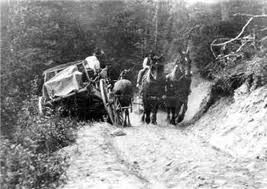
Wagon and three up on Cariboo Road

I suppose it could be likened to some of the couples one sees, of all genders, who, at first glance one might suspect have no business uniting. Some do make a viable couple and some do not.
This is a rhyme of six stanzas and therefore cannot cover all that is presented in a story of 246 pages which includes references to the wide Canadian Prairies, murder, genocide, renegades/outlaws, “manifest destiny”, Cree and Blackfoot, the early assassination of a policeman (murder again), vigilantes, gold mining, and self defense. It does give a fair idea of how I started the story; the unlikely joining of young and old, tenderfoot and “cheekako”, diplomat and attacker.
Calvenos Claim on Lowhee Creek

The video (not the best of those available but not the worst) trailer is at http://www.youtube.com/watch?v=S6LEqjRHCDQ 
And the novel itself can be found by clicking on the “Partners” cover off to the right.
Or at amazon.com/author/dmmcgowan at Barnes & Nobel, Indigo and Cole’s
It, as with my other novels is also available in a variety of digital formats.
The reason for the Barkerville pictures is that is where the story ends … and the one I’m working on with the same characters and some new troubles, begins.
            As always, leave a comment. Even if you don’t like what you read I’d like to know about it and why.

“Partners” overview
By D.M. McGowan

He was an educated man, Thomas Brash by name
Raised for the British Army to follow his father’s fame
Born in Upper Canada, the eastern Loyalist land
Then sent across the sea, military school, England

He had served in several stations, Europe, Africa and such
But found the land of Hind demanded just too much.
He left the British Army returned to his Kingston home
Taught school, married and farmed and vowed no more to roam

But fate stepped in to change the future he had planned,
Cholera took the family, he burned the house, left the land.
He wandered to the west perhaps thinking life was done
More than thirty years of effort and everything was gone.

But out there on the plains he found someone he could help
Perhaps some master plan? He’d play the cards he was dealt.
Two wandering strangers as different as they could be
Can each survive the other’s thoughts and company?

Renegades, Blackfoot and psychopaths they face
The elements alone are hard on the human race
Indian wars and killers, all the across the west
Such is their future where simple living is a test.

From different places and different teachings
Perhaps these two are over reaching
But it takes bold people to build a land
And different ideas build one that stands
Mucho Oro Claim
Pulling over for traffic on the Cariboo Road ...
Which usually necessitated a visit 


Monday, November 20, 2017

An Excerpt from “The Making of Jake McTavish”

It has been far too long since I posted here, but with a few hours “release” from hauling fuel … well, take every opportunity to do what you really want.

Here are the first few words from my latest release. It has been quite some time since it was released but it still makes a gift for the reader, those who like a little history and geography hidden within their entertainment. With these first chapters it can give one an idea of what they might be getting either in print versions or in one of the digital formats that can be rushed to someone on-line.
And here is a link to the introduction I posted when Jake was first introduced.

Paying the Price for Rape and Murder


1


Omineca Country, British Columbia, 1898

Jake McTavish came out of the winter twenty pounds lighter and a whole lot meaner. Perhaps not meaner than he had been the fall before but definitely more than he had been before his wife had been murdered. That had been slightly more than four years in the past but he had not forgotten anything about it. The more he brooded here in the wilderness the more he detested the company of his fellow man.
That meant it was his fourth year taking furs from the Finlay River country, and the fourth year he wasn’t going to have any cash money once he re-supplied for the coming season. He had collected fur, but not much more than it would take to pay for supplies and repair equipment.
He was leaning against the door frame of his cabin, morning coffee in hand, gazing down toward the river, when he said, “Maybe I’ll just have t’ shoot somebody. That way the government will have t’ feed us ‘til they punch my ticket and bury me.”
Jake wasn’t paying much attention to what he was saying. The words were just noise to fill the empty cabin; and his only companion, the blue tick hound on the floor by the stove, always agreed with him.
After four years of talking to few but the hound Jake was beginning to think the animal understood. Having experienced the intelligence of the animal he had also begun believing he knew what the dog was thinking.
“Yeah, I know, problem with that is we’d have t’ find somebody to shoot,” Jake continued, and then added, “Chester, we gotta take them furs t’ the fort. Maybe there’ll be somebody there that’s worth a five-cent bullet.”
If Jake had been serious about shooting someone, perhaps he would have paid more attention to his surroundings. Had he done so, he might have saved himself from an attack on his life. However he did notice the hound briefly lift one eyelid and quickly let it close. Another person viewing his always serious expression probably wouldn’t have believed it but Jake found Chester’s reaction humorous. They had been out before dawn checking the few trap sets still near the cabin. The mornings were still cold and Jake was sure Chester was enjoying the heat of the fire. He also thought that over the course of the past few years Chester had heard enough of his master’s growling that he was extremely comfortable ignoring it.
Jake spent the rest of the day closing up camp. He had already tripped any open traps that morning and only had four fresh hides - three beaver and a martin - to set out on drying frames. The few supplies that had managed to make it through the winter he put up in his cache cabin - a solid tree house built high between two pine trees. He gave his canoe a very careful check for damage and placed it in the water, tied securely to the log dock.
He decided to take the fresh hides laced in their drying frames by setting them on the three small bales of furs he would load in the canoe. It was precarious, considering some of the white water he would have to shoot, but he could tie them in place. The alternative was to leave them to be included in next years take, but he thought he needed everything he could get this year. Besides, if he left them he would probably find them ripped up by coyotes or wolves when he returned. Leaving them in the cabin or cache would fill those structures with enough stink to attract a grizzly. Given enough incentive a silver tip would break into anything.
The first part of the trip went as Jake had planned; and since it was his fourth trip down to Ft. St. John this was not a particular surprise. It had been a short, mild winter and he was late enough in the season that he saw very little ice, except for a few small pieces melting away from their perches on driftwood where they had been forced by the earlier heavy run off. The water was still high enough that he could avoid portaging, but low enough that he managed to keep the canoe upright with his cargo inside the craft.
Some stretches of river did create heart pounding moments. Jake was not one to admit it, even to himself, but adrenaline flowed and he worked hard to avoid rocks and whirlpools. Chester, in his assigned space at the front of the canoe, put his chin on the ribbing and his paws over his nose.
There was just enough light for Jake to shoot the last rapids on the Finlay, and enough dark that he could steer wide around the settlement of Finlay Forks without attracting attention. Everyone stopped at the landing. After a winter in the bush most men wanted company and conversation. Jake wanted neither. He also didn’t want to put up with fur traders trying to deal him out of his pelts for less than top price.

***

Two men did see him from the dock as he turned into the Peace River. One was known as Sam Twice. He had been born into the Beaver Nation but was accepted at no lodge, including that of his own family. The other was Martin Prentice, a man who definitely was wanted. He was wanted by the law in both the State of New York and the Province of Ontario. The town police in Winnipeg and Calgary would have also liked to talk to him, but they were not aware he was the one who had committed the crimes.
In the twilight Sam Twice made a flicking motion with one finger toward the silhouette out on the water. “Him maybe got fur,” he said.
“I expect he does,” Martin agreed. He took a swig from the jug he held and passed it to Sam. “Perhaps he also has a small poke of gold he’s panned out of streams.”
“Why him not come in?” Sam asked. He flicked a finger toward the large cabin that served as store, saloon, and hotel as long as one wasn’t too particular about prices, liquor quality, or sleeping on the floor. He took a swig from the jug which the two had purchased at the store. Sam didn’t care about the quality of the refreshment since he had never had anything better.
“I expect he wants more than half price for his pelts,” Martin replied. “He’ll take them down to Ft. St. John where he’ll get as much as he can get in this country.”
“Don’ like that man boss that Fort John place,” Sam said. “He marry Beaver girl. She nice girl, one time.”
Martin looked at Sam a moment. He knew there was much about Sam’s past that he didn’t know, but he didn’t really care. Sam was useful from time to time, and that was all the mattered. “I heard his wife was Cree, but what do I know? I’ve never even seen the woman.”
Sam grunted, giving Martin no idea what he meant.
Martin waved toward the silhouette of man and canoe fading into the gathering darkness. “Now, that pilgrim will undoubtedly stop for the night. Tomorrow he’ll go on to Portage Mountain. If we were to float down the river right now we could be at Portage to meet him.”
“I like maybe stay here an’ drink,” Sam objected. He wasn’t one to hasten toward any effort that wasn’t absolutely necessary.
“How would you like to have a nice canoe?” Martin asked.
Sam looked at Martin with hard, cold eyes. “I get canoe an’ you get fur?”
“No, no,” Martin objected. “We split the furs and you get the canoe. After all, I already have a canoe.”
Sam nodded several times, then placed the cork in the jug and hit it with the heel of his hand. “We go.”


2


Peace River, Portage Mountain, British Columbia, 1898

There was no question about pulling out of the water upriver from Portage Mountain. Even in late August, when the water flow may have dropped several feet, no one in their right mind would try to shoot the Peace Canyon.
It was mid afternoon of their second day of travel when Jake pulled in to the river bank. Chester jumped out onto dry ground and ran to the nearest aspen where he lifted his leg.
Pulling the canoe up so the current couldn’t take it, Jake said, “Mighty fine idea, Chester. You’re a smart dog.”
Jake unloaded his canoe and dragged the craft up onto dry ground. Chester sat on his haunches, looked at the bales of furs and supplies, swung his gaze up the trail, and then looked back at the cargo.
“We ain’t in a hurry, Chester. We’ll spend the night here. Go see if yuh can find a rabbit.”
Chester headed off into the bush and Jake collected firewood.
At the start and end of any portage there are well-used camp areas; and if the trail to more water is long enough, more stopping places along the way. The Portage Mountain trail - a long walk without carrying a pack - was no exception. There were several sites that had been used on the upriver end. Jake chose one of the spots as far back as possible from the trail end and riverbank and started his fire. If there were other travellers, he wanted to avoid company if possible. He didn’t mind carrying a little water.
While the fire burned down to coals he moved his freight and canoe up to the camp site. Gathering firewood, he noticed a small aspen sapling and cut it with his knife. Back at the fire he skewered a piece of moose meat with the green stick and drove the butt end of the stick into the ground so the meat was suspended over the coals.
As the meat was heating up to a sizzle he mixed up some bannock batter, wound it around another piece of green stick and propped that over the fire.
Chester sauntered into camp and dropped to the ground at the edge of firelight.
“You’re getting lazy, old man,” Jake said. “First smell o’ cookin’ meat an’ you come back.”
He turned his gaze to the hound and saw the relaxed, satisfied look and the long tongue licking lips.
“I apologise, old man. I don’t know what you mighta found t’ eat on this pile o’ rocks, but you’ve found somethin’.”
When he finished eating and washing up, Jake threw a couple of sticks on the fire and propped the canoe up so it would collect and hold the heat for his bed. He propped himself up against a dry log, loaded his pipe and leaned back puffing contentedly.
“Nothin’ wrong with this, Ches. Nice warm night.”
Surprised at his master’s good mood, Chester grunted.
During breakfast the next morning Jake decided to continue taking it easy. Even though the two bundles of furs were not very large he would pack them around the mountain one at a time. The four fresh plews had not been properly treated, but they were dry so he decided to tie them on to one of the bundles. He pulled a bag full of string and sinew from his possibles pack and wrapped the hides in place, cutting the ends of sinew off and putting them back in the bag.
He was already on the trail when he realized he hadn’t put his knife back in the sheath. He hesitated, decided he would pick it up on the next trip, and started off again.
He had only taken a few steps when he heard Chester off the trail to his right. There was the beginning of a bark followed by a howl that was abruptly cut off. Jake swung the pack of furs from his shoulders, dropped it to the trail, and stepped into the brush.
There was blinding pain from the back of his skull. He saw a light as bright as the sun. Then he fell into blackness.


Saturday, January 5, 2013

The capture of Almighty Voice


            Almighty Voice, a Swampy Cree mentioned in my novel “Cattle Business” was born in Duck Lake, District of Saskatchewan, North West Territories in 1875. In the autumn of 1895 he married a young woman from a neighbouring reserve. During the preparations for that event he discovered a cow wandering on the prairie which he butchered to feed his guests.
            Ownership of the cow is a question that can not be answered at the date of this writing. It has been said that it was loaned to the reserve for breeding purposes and was the property of the Canadian government. It has also been claimed as the property of a neighbouring ranch and had wandered onto the reserve. The one thing that is certain is that it did not belong to Almighty Voice, or as the white man had recorded his identity, Jean Baptiste. On October 22, 1895 he was arrested for butchering that cow.
            During his transport to NWM Police cells one of the officers, demonstrating that stupidity and poor taste are not confined to any particular time joked that the penalty for killing a cow was hanging. Later that very evening, during shift change at the Duck Lake jail, Almighty Voice walked off into the night. Undoubtedly he thought a penalty for escape was better than hanging for cattle theft.
            It is known that he went, that night at least, to his mother’s house but he did not stay there very long. He went from there to the John Smith reserve at Fort a La Corne and picked up his wife.
            Following a week of freedom the camp of Almighty Voice and his wife was discovered by Sergeant Colin Colebrook and his Métis guide/interpreter François Dumont. The Sergeant, sure of the protection inherent in his position as a policeman rode boldly into the camp demanding that Jean Baptiste surrender.
            Dumont translated the order.
            Almighty Voice raised his rifle, pointed it at the Sergeant and said, "Leave us. I must kill you if you don't turn back."
            Dumont translated the order in English for the Sergeant and added, "He's serious."
            Sergeant Colebrook continued his approach, although he did put his hand on his revolver.
            Almighty Voice repeated his demand.
            Sergeant Colebrook continued.
            Dumont translated again and repeated his warning.
            Almighty Voice fired killing the Sergeant with a bullet in his heart and driving him from the saddle.
            Dumont urged his horse out of the area as fast as possible.
            News of the Mounties death spread across the Territory. Within the NWMP force the news was followed by a demand for immediate action. Fewer than a thousand police officers trying to maintain order in an area larger than many continents with a population of a few hundred thousands can not afford to have their authority questioned. A $500.00 reward (more than $13,000.00 in 2010) was offered for the capture of Almighty Voice.
            Despite the best efforts of the Mounted Police it was 19 months before Almighty Voice was found and then it was because a civilian saw three Cree butchering another cow. It was later determined that the three rustlers were Almighty Voice, and his relatives, Going-up-to-the-sky and Tupean.
            On May 27, 1897 the owner of the butchered cow, Napoleon Venne and Mounted Police Corporal William Bowridge approached the beef carcass. In a nearby grove (locally called a "bluff" at that time) of willows and poplars they saw two men. However, when they tried to approach the men they were fired upon and Venne was hit. When they turned their mounts and attempted to flee the area another bullet drove the hat from Venne's head.
            Bowridge sent for back-up. On May 28th the grove of trees was surrounded by a posse of Mounties and civilians lead by Assistant Commissioner John B. Allen, "Bronco Jack" to his friends.
            Several attempts where made to approach the concealed outlaws. Two sweeps through the trees where made. The result of these several offensive probes was the serious wounding of Sergeant Charles Raven and Assistant Commissioner Allen.
            Corporal Charles H. Hockin was now in command.
            Hockin attempted to smoke the fugitives from the trees, but the wet, green growth of spring didn't do much to help their efforts. However, they had spent so much time trying to light a fire that now dark was approaching. With the need to transport wounded back for treatment the Corporal's posse had been reduced in size and he was afraid the fugitives would slip away in the night.
            Corporal Hockin called for another assault. Nine men entered the trees on foot.
            The trouble was that they found the fugitives.
            Six men retreated carrying three. The dead where Batoche post master Ernest Grundy and Mounted Police Constable John Kerr. Corporal Hockin was mortally wounded and died a few hours later.
            Assistant Commissioner John McIllree and twenty four Mounties arrived on the scene. With them they dragged two cannon, a seven pounder from Prince Albert and a nine pounder from Regina.
            From late afternoon on May 29th to mid morning of May 30th the trees where bombarded.
            The bodies of the fugitives where found in a pit they had dug.
            One civilian and four Mounted Policemen had been killed. One civilian and two Mounties had been wounded.
            The Almighty Voice story reached a conclusion that was a success for no one.
            During the many months of the Almighty Voice case there had been a strong feeling within the NWM Police and within some government circles that it might lead to a general uprising such as had taken place in 1885.


Wednesday, November 7, 2012

Boone Helm, killer and cannibal

Born in Kentucky in 1828 Boone Helm was the second youngest of five brothers who all died violently. It is well known that at least two of the brothers where homidical and perhaps all of them required quick separation from life as a means of protecting the rest of society. However it is doubtful that any of them where as dangerous to human kind as was Boone.
            His first victim was supposedly a friend, Littlebury Shoot who couldn’t decide fast enough, in Helm’s estimation at least, when they should leave Jefferson City Wyoming for the gold fields of California. Boone ended the discussion by plunging a knife into Shoot’s heart. The year was 1852.
            He was captured and returned to Missouri where he demonstrated his fine acting ability and convinced authorities that he was insane. Once he had established a back-ground as a model inmate he escaped and headed once again for California, killing several people in his travels. Familiarity breeds contempt it is said and such was demonstrated when Boone was careless enough to allow a witness to view him shoot a man in the back. Now he was wanted for murder in California.
            Avoiding a California lynching Helm appeared in The Dalles, Oregon where he attached himself to a group of gambling prospectors. There was gold just to the north in the British Colony of British Columbia but they also had a police force up there. The group decided to go east through the Wasatch Mountain Range to the gold strike at Camp Floyd, Utah.
            It was a poor decision for winter was closing in. In 1860 Helm made it to Salt Lake City where he had money to spend. When he left Oregon he had been broke. A great deal of evidence suggests that he survived the mountains and passes by consuming parts of at least one of those in the party that left Oregon; perhaps the very one who also supplied the money.
            After that it was a horse stealing operation where he found it more convenient to kill the two men guarding those horses. Later, in Lodi, Utah a soldier assigned to the US Quartermaster Corp recognized him in a crowded saloon. Helm solved that problem with a bullet through the soldier’s head.
            Back to California, where there were suspicions and then to Washington Territory where he had an argument with Dutch Fred a well known and popular gambler. Later, Helm won the argument by shooting Dutch in the back as he played poker.
            Dutch, as mentioned, was popular. Helm was quick and only escaped Dutch’s friends by going north across the 49th parallel into the British Colony.
            In July, 1862 three bodies floated down the Quesnel (Kwe-nell) River. They where identified as three miners well known to fellow miners in the Williams Creek area. They where known to have $32,000 in gold. After several witness statements and police work by BC Colonial officers it was shown that Boone Helm was the culprit. A posse was formed but Helm had disappeared.
            Barely off the ship and in Victoria on the Vancouver Island Colony Helm was arrested October, 16, 1862 for stealing apples and refusing to pay for drinks in several saloons.
            He tried his acting abilities again. He told Judge Pemberton that he was “a stranger in a strange land” and that “if it wasn’t for the prison cell I occupied last night I would have had to walk the streets of this fair city as I am wholly alone, penniless and afraid, having neither chick nor child, kith or kin.”
            Pemberton said later that it was an excellent presentation. However, Helm had been bragging the night before in his prison cell of how dangerous he was and how he had killed a man in Washington country. He sentenced Helm to a month in jail hoping they could get word to US authorities and have a reception committee waiting for Helm when he stepped out of Victoria’s Square Bastion stockade.
            Perhaps the letter was lost. Perhaps the person who received the letter had never heard of Dutch Fred. Perhaps they had more pressing business that month. Whatever the reason, there was no response from the US and at the end of the thirty day sentence Helm was released.
            Three days after his release, Victoria Police Chief Horace Smith received a message from the Deputy US Marshall in Florence. However, Helm was already well across Georgia Straight and somewhere up the Fraser River in the Colony of BC.
            With Victoria Police, Vancouver Island Colonial Police, British Columbia Colonial Police and US Marshalls all looking for Helm, his travel plans where bound to change.
            Boone Helm was captured near Fort Yale on the Fraser River.
            Was he headed back up country to dig up the gold from the triple murder the year before? The amount missing would be the equivalent of more than a million dollars in early twenty first century. It was in gold, a product readily identifiable as to area. Two months after the murders when he appeared in Victoria Helm was broke.
            Or did one of the so-called witnesses have the gold?
            There is no record of anyone have that kind of money or of a sudden unexplained change in fortunes.
            Since the murder of Dutch Fred preceded the others known at the time and US authorities where already on-site, Helm was extradited to Washington Territory. However, older brother “Old Tex” Helm bribed the main prosecution witness and the case fell apart. Once again Boon Helm walked and was no where to be found when Colonial authorities suggested he could now be tried for the triple murders on the Quesnel River.
            However, does anyone remember the story of Virginia City, Montana 1864? Miners where disappearing there in unknown numbers, along with their gold, until, under the strictest secrecy, a vigilante committee was formed. Henry Plummer and his band, the “Innocents” where, in most cases, caught and hung. On the morning of January 14th, 1864 more than 5000 residents watched as Jack Gallagher, Clubfoot Lane, Frank Parrish, Hayer Lyons and, yes, Boone Helm were hanged.

Monday, March 12, 2012

Murder of a Policeman

When he arrived on Vancouver
Island in 1858 he was known as Charlie Brown. Due to his
proclivity for so called easy money he soon came to the attention of the newly
formed British Columbia Colonial Police and Victoria Municipal Police. However,
with a gold rush breaking out in some area of the colony almost every year, law
enforcement was hard pressed due to the constant influx of gold seekers. Due to
the lack of manpower and time as well as the insipidness of his name, little is
known about Charlie’s earlier history except that he may have been in California
and Oregon Territory.
Once in the British colony,
however, it was obvious Charlie’s search for gold would not include digging or
washing for it. He was caught on several occasions selling grain alcohol to
Indians. Following one of those occasions, while awaiting trial, he was
attacked by another arrestee, a Haida Indian to whom he had sold a barrel of
sea water as whiskey.
Mr. Brown’s last extended stay in
Victoria’s Bastion Street Jail began some time in 1875 with a one year sentence
for, once again, selling alcohol without a permit and selling alcohol to
Indians. He refused to work and was placed in solitary on bread and water.
One afternoon another Charlie,
jailer Charles B. Wright came to move Brown to a new cell. Mr. Brown threatened
to kill Wright if he tried. During the ensuing struggle Brown managed to put
Wright in a headlock. The jailer (they were armed in those days) drew his
revolver and put it up to Mr. Brown threatening to “blow his head off.” When
Brown increased the pressure, Wright pulled the trigger.
Charles Wright did not manage to
blow Charlie Brown’s head off as he had predicted. He did manage to blow his
ear off, however, thus creating “One Eared Charlie Brown” who, though he lost
an ear, gained another year to his sentence.
It has been stated, with great
justification, that “One Ear” Charlie Brown, “Hospital” Hall, and “Sebastopol”
Jones and their distribution of alcohol were the greatest reason for the
disappearance of the Songhees Indians.
Having served a good portion of
his sentence One Ear Charlie became “ill” and was transferred to hospital. He
suddenly improved dramatically, escaped and left the colony. Victory lawmen
didn’t look too hard for, as one said, “If he has left the island its good
riddance.” One Ear Charlie became a problem for US lawmen. However, he would
return to the colony in the spring of 1867 for a short time. After that short
stay he would return very briefly to the US
and then be a problem for no one.

In 1866 there was another gold
rush in the Kootenay Country, centred on a town called Wild Horse Creek.
Following some serious turbulent times the town and the Kootenay area were
being policed by four BC Colonial Constables, William Young, James Normensall,
John Carrington and a rookie, Jack Lawson. The young rookie was very popular
with the Kootenay miners.
In the spring of 1867 One Ear
Charlie Brown showed up in Oregon Territory
at Kootenay Trading Post. He stole two horses and rode north into the BC
colony.
The brothers who owned the
horses, Dutch homesteaders, rode north after their property and, having
determined the proper trail, rode on to Wild Horse Creek in search of a lawman.
Upon arrival they found that all officers were out on patrol except for the
rookie, Jack Lawson.
The Constable and the two horse
owners rode south, eventually approaching One Ear on the trail. Jack had the
brothers wait while he closed on the horse thief.
Having identified himself, Jack
inquired as to the ownership of the horses where upon One Ear made a move with
one hand toward the inside of his shirt. Jack drew his Colt and demanded One
Ear freeze but then made the mistake of diverting his attention to the brothers
behind him on the trail.
Perhaps he was concerned for the
brother’s safety or intended to call them forward to identify the horses. Maybe
it was a young man’s belief of invincibility or a disbelief in old men’s
stories of gunfights. Whatever the reason for Constable Lawson’s distracted
attention it allowed One Ear the opportunity to draw his revolver and shoot
Jack in the head.
The brothers fled back to Wild
Horse Creek for more help.
Jack Lawson fell dead from his
horse.
One Ear dismounted, dropped his
Manhattan Revolver (probably a .36 or “Navy Model” but it could have been a .31
pocket model) on the ground and picked up Jack’s relatively new Colt. (The 1860
Model Army was issued to BC officers.)
On their arrival in Wild Horse
Creek the two horse ranchers discovered the other three policemen still hadn’t
returned. They told their story to the citizens who were all upset about the
murder of Constable Jack Lawson. Four local miners were so upset they took out
on One Ear’s trail.
They followed the trail for
several days. Eventually they deduced One Ear’s intention and by taking another
trail managed to get ahead of him and lay an ambush. They confronted him on the
Walla Walla Trail 43 miles south of the BC Colonies border, not far from
Bonner’s Ferry.
According to accounts, three
shotgun blasts blew One Ear Charlie Brown from the saddle. They buried his
riddled body beside the trail.
Why three shotguns and not four?
Who knows? I suggest a possible explanation in my fictional account of the
event in the novel “Partners”.

Racism in Canadian Law

 Racism in Canadian Law Multiplying victim number in Canadian court rooms. A ver interesting post from the Aristotle Foundation, the same pe...